
Replacing missing teeth / Eastcote & Pinner
Close the space. Consider the support.
A missing tooth can leave more than a visible gap. A bridge is one way to replace it with a fixed restoration, using neighbouring teeth for support where they are suitable.
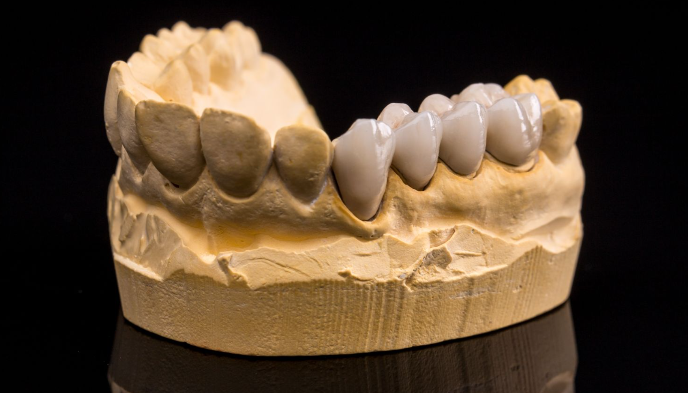
Dental bridges. A connected restoration.
- Fixed tooth replacement
- Support assessed first
- Alternatives explained
Understanding your options
A replacement with a foundation.
The gap matters, but so do the teeth beside it. Their condition and your bite help determine whether a bridge is an appropriate choice.
How a bridge works
A replacement tooth is held in place by a restoration attached to one or more neighbouring teeth. Unlike a removable denture, a bridge is fixed in the mouth.
Different ways to attach
Conventional bridges may involve crowning supporting teeth. In suitable cases, a bonded design uses an attachment to a neighbouring tooth. Each has different requirements and limitations.
Weighing the choices
A denture, implant or leaving a space may also be discussed where appropriate. Consider the effect on adjacent teeth, cleaning, treatment time and cost alongside appearance.
Look beyond the gap
Gum health, support around the roots, existing fillings and the forces on the bridge all matter. Not every space or supporting tooth is suitable for a bridge.
At the practice
Your care, step by step.
Planning a bridge means assessing the space and the teeth that would carry it, then making the design understandable before preparation begins.
Planning your visit
Plan the replacement and its support.
The bridge shown is a laboratory example, not an individual outcome or a promise of the design suitable for you.
Assess the gap
Your dentist checks the missing-tooth space, neighbouring teeth and gums, using X-rays where needed.
Choose a design
Discuss suitable bridge types and alternatives, including any preparation of healthy tooth tissue and the likely maintenance.
Prepare the restoration
Teeth are prepared as the design requires and records are taken for the laboratory. A temporary replacement may be considered during this stage.
Fit and demonstrate
The fit and bite are checked, and your dentist shows you how to clean beneath and around the bridge.
Looking ahead
A plan that makes sense.
A fixed replacement still needs daily attention. Understanding how to care for the supporting teeth is part of deciding on a bridge.

Clean underneath
Food and plaque can collect beneath the replacement tooth. Use the cleaning aids recommended for your bridge, and contact the practice if it loosens or becomes uncomfortable.